

23rd March 2026
Lingfield College Featured in Good Schools Guide
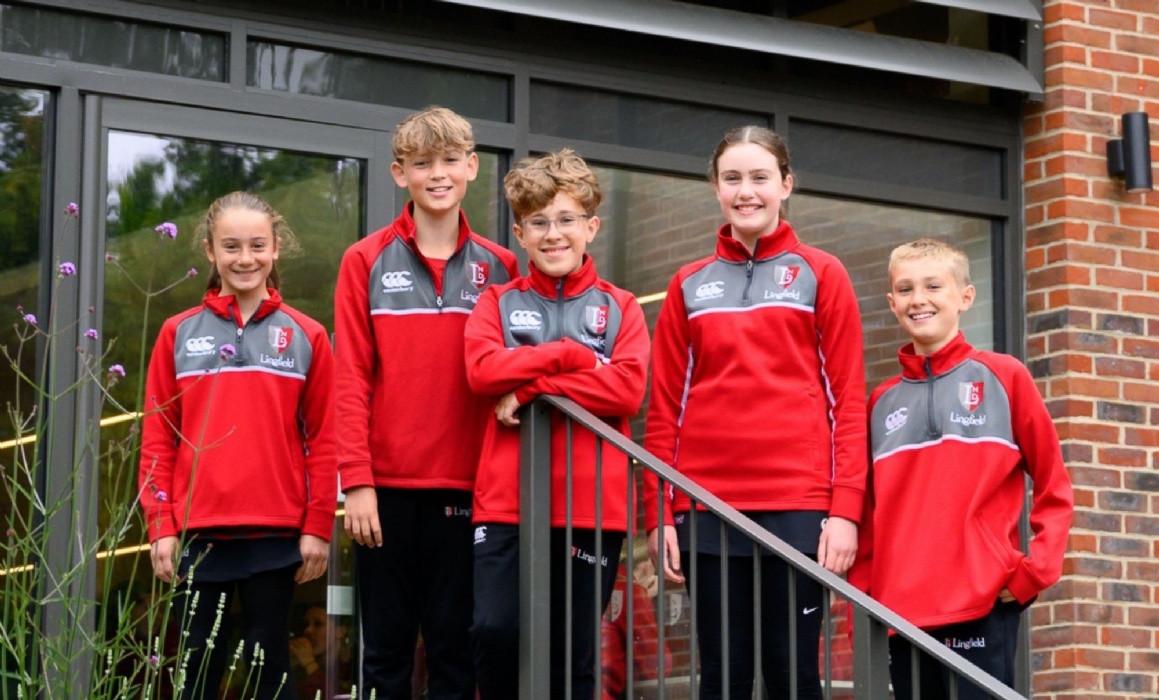
Lingfield College, an independent day school in Surrey, has been featured in The Good Schools Guide, one of the UK’s most respected independent school review publications.
Based on a full-day visit, conversations with pupils, staff and parents, and wider research, the review provides an impartial and first-hand insight into life at Lingfield College. Schools cannot pay to be included, making it a trusted source for families exploring school options.
Lingfield College - Good Schools Guide Highlights
- Described as a “kind, driven, gentle school” where pupils are happy and supported
- Strong pastoral care and a close-knit, welcoming community
- Broad and balanced curriculum across academic, creative and sporting areas
- Wide range of co-curricular opportunities, ensuring every pupil finds their strengths
- Supportive and ambitious Sixth Form with strong university and apprenticeship pathways

About the Good Schools Guide
The Good Schools Guide is written for parents and aims to provide a realistic, balanced view of schools across the UK. Reviews are based on direct observation and feedback from the school community, highlighting both strengths and areas for development.
A Summary of Lingfield College
The review highlights the distinctive character of Lingfield College as a school where pupils are known as individuals and supported to thrive. It reflects a community that values both academic progress and personal development, with opportunities across a wide range of areas so that every pupil can find their strengths and interests.
Parents love the family feel of Lingfield College, calling it a ‘kind, driven, gentle school’ where children seem ‘much happier here than at competing schools’.
The Good Schools Guide
Lingfield College Review, December 2025
The review highlights the leadership of the Headmaster and the impact this has had on the direction and development of the school over time.
Since 2011, Richard Bool. Attended St Paul's School then Exeter (geography). Law conversion at The College of Law, Guildford, then a training contract at Linklaters. Five years later, deciding law wasn't for him, he obtained a PGCE (IoE) and started teaching geography at Sherborne School in 1998. After 10 years there (five as house master) and three years as deputy head at Ardingly College, he came here – although he admits (despite working 30 minutes down the road) he’d never even heard of it. ‘It had a low profile,’ he explains, ‘and there were opportunities for improvement.’
Fourteen years on, he's expanded and modernised the sixth form, transformed sports and music, introduced a wider range of subjects and increased academic enrichment. ‘The key to improving outcomes is being relentlessly focused on marginal gains,’ he says. Recent initiatives include year 11 taster lessons, staff mentors for upper sixth and opening school on Saturday mornings for those working towards GCSEs and A levels.
He still teaches at least once a week, often two lessons at the prep school. ‘Other teachers need to know you can do it and that you experience the same challenges, like writing subject reports.’ He meets every child (year 3 upwards) once a year for a one-to-one discussion about their progress and wellbeing, hosts weekly lunches for senior school students and attends fixtures and events.
Schools should strike the right balance between being nurturing and stretching children to achieve their best.’
He recruits teachers with ‘drive and hunger’ for their pupils’ success and says, ‘Charisma isn’t as important to kids as knowing that they’re making progress.’ He’s a ‘good manager’, say parents. ‘He surrounds himself with good people, gets things done and makes strong choices.’ Some parents we spoke to questioned his ‘communication style’, but others said they felt listened to. ‘He’s what I want from a head,’ said one mother. ‘Strict, high expectations, fair, old-school.’
He is a keen runner and swimmer and loves to travel.
Teaching & Learning
The review highlights a warm and engaging learning environment in the Prep School, with classrooms described as colourful and welcoming.
Visiting prep, we find colourful, welcoming classrooms with impeccable wall displays throughout. The bright, clean nursery subscribes to the natural-materials, low-stimulation model, and we saw happy children who (parents say), ‘adore the staff’. Babies from 6 months were waking from nap time in the baby room, a haven of low lighting and sensory music. The young start is clearly sought after - there’s a waiting list.
Years 1 and 2 were tidying away pre-Christmas activities when we popped in. They undertake ‘core curriculum’ in the mornings and ‘curious learning’ (following their own interests) in the afternoon. Year 3 were ‘drawing what Jesus looks like in our imagination’ in RE. We liked ‘Jesus on the tube wearing a sari’ and a ‘sci-fi Jesus’. Learning in prep is frequently cross-curricular and topic-based.
The whole-school motto, ‘I can, I know I can’, is consistently displayed.
‘Stretch and challenge’ activities are woven into the curriculum. English is set from year 5 and maths from year 3. One mother, whose child ‘struggled with maths’ felt he made good progress in ‘support set’ where learning is practical and carefully paced. Languages are sampled throughout prep; years 3 and 4 learn French, while years 5 and 6 learn Spanish, with one term of German in year 6 to prepare for senior school.
We found year 5 looking studious in their ‘STEM science lab’ and loved the creativity on show by both year 6, who were designing sustainable cities using a 3D design tool in computing and year 4, who enjoyed ‘jelly printing’ in the bright and spacious art studio. Later, we met year 6 again, pond dipping in the Pond of Perseverance.
Groups used tablets and worksheets to identify their finds. 'Once we came here to sail boats we’d made in science,’ our clever tour guide explained, ‘but that went wrong... gravity and uplift needed to be equal.’ Pupils described their favourite teachers as ‘funny, but strict when they need to be.’
Touring senior school, we saw functional classrooms (up to 16 pupils) where paper and pen still reigned over laptops. ‘It’s important for them to develop those skills,’ say staff. There’s certainly no shortage of computers when needed. Smart computer labs and banks of computers in several classrooms, including the welcoming library (picture fairy lights in the fireplace) at the heart of school. Laptops (purchased through school) introduced from year 10.
‘My child loves it here and is really flying,’ said one parent of a year 7 joiner, another telling us, ‘Communication has always been good with staff.’ Children we spoke to valued teachers who are funny and ‘make things interesting’, breaking learning down. ‘I used to hate science in my old school,' said one mover from state, ‘but my teacher made me enjoy it, with lots of practicals and great demonstrations. My attitude to school has changed... I’m much happier here.’ Another pupil, from year 8, praised ‘funny examples’ his teachers gave, which were ‘memorable’.
Most senior classes are mixed ability, but there is setting in maths and in some MFL from part way through year 7 - and in English from year 8 and science from year 9. Nine or 10 GCSEs is the norm - Spanish, business, food and nutrition, PE, geography and history are most popular. Music, history, languages, maths and physics do best. Nearly half take triple science.
We glimpsed spacious labs in which year 9 were studying the circulatory system. Movement between ability sets is fluid. One parent, whose daughter started this year, said she ‘moved up quickly’ as she settled in, caught up and started to flourish.
Attainment tracking involves termly assessments, internal academic progress review meetings, then parents’ evenings and/or reports based on both sets of data.
Many classes in action off the (impressively quiet) ‘main corridor’, including A Level philosophy and religion. Year 10 geographers were studying the impact of transnational corporations on Nigeria in discursive partnerships. In year 8 maths, pupils worked in pairs ‘investigating circles’ with practical resources. Beside a sign reading ‘I'm finished, what shall I do?’, ‘challenge questions’ were pinned up in folders. Languages commence flexibly, (Spanish and French, or Spanish and German) and are not compulsory at GCSE. New for 2026 - GCSE and A Level sociology.
Off the English courtyard, year 11 analysed poetry in an atmosphere of quiet discussion. Ten minutes of silent reading settles children (years 7-9) and builds reading habits. Teachers ‘think of everything’ to help, children tell us.
Maybe excellent staff retention contributes to the prevailing calm; teachers say they stay because it’s such a nice place to work.
Sixth Form
For years 12 and 13, timetabling includes six sessions of supervised study in the sixth form centre, with café and workspace. The university-style lecture theatre, used for economics and business teaching, also hosts careers lectures, mental health forums, quiet study and options evenings.
BTEC options are a big contributor to improved retention, and include business, digital film and video production, and sport. Of the A Levels on offer, psychology, maths, business, economics and media are most popular. Sociology has just been added as an option - already looking popular. Most students study three subjects and around a third complete the EPQ.
Sixth formers we chatted to were confident and ambitious. ‘Teachers care, and want you to do well,’ said one. Parents praise the workshops and drop-in support offered right up to the last minute before exams. ‘They do this so well,’ said one mother, 'helping pupils access apprenticeship programmes, running careers events, support with writing applications, trips to UCAS open days...’ One mother said her son received so much one-to-one help, ‘it felt like hours of tuition for free!’
‘We work hard with them on post-18 choices,’ say staff, ‘and we don't abandon those that don't do as well on the day.’ Two UCAS co-ordinators and a (former city head-hunter) careers advisor.
Learning Support & SEN
Two SENCos (one in senior, one in prep) share whole-school policies. ‘Observations, observations, observations’ said the co-ordinator from prep. ‘Who's fidgeting, who's got their shoes off? We identify SEND needs early on and put the support in, generating a bridge between parents and teachers.’
IEPs (individual education plans) in prep become ‘pupil passports’ in senior school. Parents say ‘teachers read and react appropriately’ to this information and that they are kept in the loop about the support their children receive. A mother added that it’s ‘not weird for kids who are supported here because loads of kids get support’.
We liked the ‘can do’ approach towards neurodiversity. ‘These pupils have strengths and talents - our job is to help them see it in themselves, and help teachers get that from them,’ said the senior school SENCo.
Parents attest to the lengths staff go to in establishing the right support for each child. Qualified dyslexia teaching and assessment available in-house. Visiting educational and clinical psychologists.
‘I want parents with SEND children to be confident coming here,’ said the head. ‘But nobody should doubt the school’s competency across abilities, in achieving excellent results for all.’
Arts & Extracurricular
In prep, a smart drama studio sits beside the school hall, where we fell in love with the (nursery age) barn animals variously singing or daydreaming through the opening number of their (nursery to year 3) nativity play. Reception showed off their costumes as they lined up to rehearse. ‘I’m a narrator!’ announced one boy; others chorused ‘We’re angels from heaven!’ One prep parent credited her child’s confidence to having had ‘so many opportunities to perform’.
Year 3 and 4 do an annual show, year 5 have an ‘arts week’ and year 6 do a leavers’ show (most recently Mission Implausible). Seniors get two drama studios and an auditorium for assemblies and performances. Here, we saw year 8 linking still images as part of a drama class, and year 11 rehearsing for their upcoming exam. GCSE technical skills (lighting) is an option.
Recent productions (two a year) included The Snow Queen and Michael Morpurgo’s The Butterfly Lion. LAMDA is offered throughout with consistently strong results.
‘Music teachers are fabulous,’ say parents. ‘They treat the children like adults.’ One mother said, ‘Our daughter feels involved in school life and music has been an important part of that.’
‘Peripatetic teachers deliver 85 lessons per week in prep (including some on the harp),170 in senior. Orchestra, choirs and bands perform across an annual programme, including Christmas and spring concerts, Rock and jazz night, cabaret night and recitals. We watched the brilliant ‘show choir’ in action, 40 children singing through smiles, while their teacher leapt back and forth with infectious energy. Prep choir’s performance at a local nursing home is an annual highlight.
Food and nutrition (offered at GCSE) is well resourced and a popular choice, though squeezed by timetabling restrictions.
In a spacious art room, year 10 had easels out and were painting in a peaceful, focused, atmosphere. Parents praised the ‘passion and skill’ of art teachers. We would have liked to see more examples of pupils’ art displayed around school, though.
Over 100 clubs are spread across sports, creative, music, mindfulness and STEM. Every pupil has to do at least two – and there’s a lovely long lunch hour (an hour and 10 minutes actually) to allow for this. Favourites include anti-bullying club, uke troupe and journalism club in prep and med-soc, script to screen, astronomy GCSE and Lingfield pride in seniors.
Trips range from international (New York, Italy, Iceland) to frequent, more accessible options (London, Tunbridge Wells, Ashdown Forest).
Sport
Sport has thrived over the last decade, with new leadership, the introduction of Saturday fixtures and an expectation that families ‘get behind’ school’s efforts. Now, the successful reputation is precipitating a ‘multiplier effect’, says head, driving more and more sporty families to the school. ‘Five years ago, we didn’t even have a girls’ football team and now we have a chance in the finals.’
The emphasis is on ‘broad participation’, says the director of sport, and parents tell us children in C and D teams feel celebrated. The message: this is a sporty school, but you don’t have to be sporty to be happy here. Describing the success of classmates in cross-country, athletics, swimming, hockey and netball, year 5s said, ‘You get a lot of opportunities.’
We visited facilities in the senior school including floodlit Astro. Boys focus on football, hockey, cricket, tennis, athletics (less rugby and basketball). Girls play hockey, football, netball, tennis, athletics, cricket. Football coaching (both sexes) is supported by academy players. Links with local clubs and academies. ISFA and ESFA final stages performance across football teams, including U15 boys national trophy finalists and U15 girls national cup quarter finalists (2025). Several pupils train at national level. Hockey teams in regional and national final stages, including U13 ISA nationals silver medallists. U15 netball national finalists (2025).
No swimming pool (parents regret), but year 3 and 4 swim nearby. All swimmers supported through conditioning and strength training (fitness suite and dedicated staff) and opportunities to compete have led to ISA national championships wins.
Equestrian is a well-established co-curricular option. Pupils compete at regional level and school hosts an annual inter-school event at a local showground.
The message: this is a sporty school, but you don’t have to be sporty to be happy here.
Ethos & Heritage
In 1940, Notre Dame School (founded by three Sisters of Notre Dame) was established in Lingfield for 14 World War II evacuee girls, numbers rising to 70 by the end of the war. To accommodate growth, they purchased and moved into Batnors Hall, on the present site of the junior school. Expansion continued, and in 1986 when the sisters of Notre Dame left, the school was purchased by an educational trust formed by a small group of parents.
No longer a boarding or faith school, Lingfield College continued to grow, purchasing more land, constructing playing fields and building facilities across subject areas. By 2000 when they went co-educational, the school site measured over 40 acres.
In the prep school’s woodland cafe, skylights depict planes on their flightpath above. Children tell us they love the mushroom wellington and spaghetti bolognese. There’s debate about the quality of the shepherd’s pie, but ‘the chips are amazing!’ When someone mentions ‘the cookie with jam’, they all chorus, ‘That’s the good stuff!’ After lunch, the ‘world of adventures’ playground (with cool zipline) is favoured by years 4 to 6. Once a week, ‘playground pals’ from years 5 and 6 play with the littlest children.
Pastoral Care, Inclusivity & Discipline
Excellent local reputation for pastoral care, with families coming here on the strength of that support. After a difficult start elsewhere, ‘My son found his tribe,’ said one parent. Another said, ‘Our child has had a positive experience, despite difficulties. Wow, the care and attention to detail - and staff were proactive and mindful.’ Parents say that when social problems arise, staff handle things ‘nicely and ‘subtly’ and that they ‘speak to parents promptly’ and ‘make themselves available.’ One mother praised how ‘accommodating and flexible’ school has been supporting medical needs.
Sixth formers mentor lower schoolers and support younger pupils with DofE activities. Two ELSAs (emotional literacy support assistants), one part-time counsellor, two pastoral welfare staff. Additional emotional support from Roscoe and Luna, the wellbeing dogs. In the library, there’s a den for younger pupils, where the ‘quietly social club’ takes place - and after-school study for years 7 and 8 only. ‘Constant kindness campaign’ is led across school by anti-bullying ambassadors.
Smart phone free year 7 means it’s ‘brick phones’ only. In year 8, smart phones are kept off and away. Parents say rules are ‘relatively effective’, with children still ‘discreetly’ accessing phones during the day. Children who are ‘busted’ have them confiscated. Relaxed approach in sixth form.
Diversity is broadly reflective of the local area. Designated EDI (equality and diversity) lead overseas curriculum activities, assemblies and displays to promote identity-based awareness.
When it comes to discipline, staff say, ‘When children mess up, we want them to own that, take responsibility and move on.’ Lunchtime detentions escalate to Friday after school, then Saturday morning. ‘They do happen,’ confirms one parent. Some teachers are ‘stricter than others’, say pupils – and we heard lots of groans for the ‘litter picking’. On the upside, ‘snack vouchers’ are awarded for ‘special efforts’, and merits ultimately yield Amazon vouchers.
Parents say that when social problems arise, staff handle things ‘nicely and ‘subtly’ and that they ‘speak to parents promptly’ and ‘make themselves available'
Pupils and Parents
Numerous bus routes, including one full coach from Sevenoaks. Families are quite spread out. ‘It’s a completely different car park’ to some independents, says one mother. 'You don’t see Porsches and Land Rovers, and ‘both parents working is the norm'. Another agreed: ‘You don’t feel out of your league.’ Staff describe families as ‘grounded in the local community’ and ‘unpretentious’. New parents feel welcomed with open mornings, parent association events, coffee mornings and open assemblies.
Money Matters
Fees are competitive within the local market. Exams in year 4 for academic, sport and music scholarships. These run to year 8 and are worth 10 per cent. Senior scholarships (worth 10- 20 per cent) include drama and art and are awarded in years 7, 9 and 12. Academic sixth form scholarships worth 30 per cent. Means-Tested Financial Assistance available.
Entrance & Admissions
From 6 months into nursery (70 per cent progress through to the prep). Main entry point in prep is reception, although year 5 and 6 starts are popular, with families getting ahead for senior school places and/or sidestepping 11-plus pressure at other schools.
In seniors, most join in year 7 when newbies make up 50 per cent of the cohort (the rest come up from the prep) – they come from local primaries and preps (ratio 70/30). Some families apply after missing out on grammar. Smaller but regular intake in year 9 – usually around 20 students. Most settle quickly, though one parent noted a ‘trickier adjustment’.
A dozen new joiners at the sixth form. They need 43 GCSE points from their best seven subjects. Applicants with fewer points are considered individually, with offers based on suitability for chosen courses.
Exit
Ninety per cent of prep pupils enjoy a seamless transition (no tests) into year 7. Around 70 per cent stay for sixth form - leavers mainly to sixth form colleges. First choice university destinations secured by 90 per cent of leavers, with Exeter, Bath, Bristol, Nottingham and Newcastle most popular. One into medicine, two Oxbridge in 2025. Competitive apprenticeships secured (four in 2025), including L’Oreal and BP.
The Last Word
Parents love the family feel of Lingfield College, calling it a ‘kind, driven, gentle school’ where children seem ‘much happier here than at competing schools’.
It’s academic enough, but doesn’t cater only to the academic,’ summed up one.
All talents are celebrated and opportunities across subject areas mean everybody finds their thing.
The Good Schools Guide
To find out more about Lingfield College or to visit the school, please explore our Open Events or contact our Admissions team.