

Drama & Theatre Studies
Drama & Theatre Studies is an exciting and dynamic choice at A Level, opening pathways to further study in drama and a wide range of other subjects. The course is excellent preparation for careers in the arts and cultivates skills highly valued by universities and employers. Students develop practical, creative and communication skills through active participation in drama productions and theatre visits, and the course also involves analysing and writing about plays, studying theatre practitioners and critiquing productions. This balanced approach nurtures well-rounded, confident and articulate individuals.
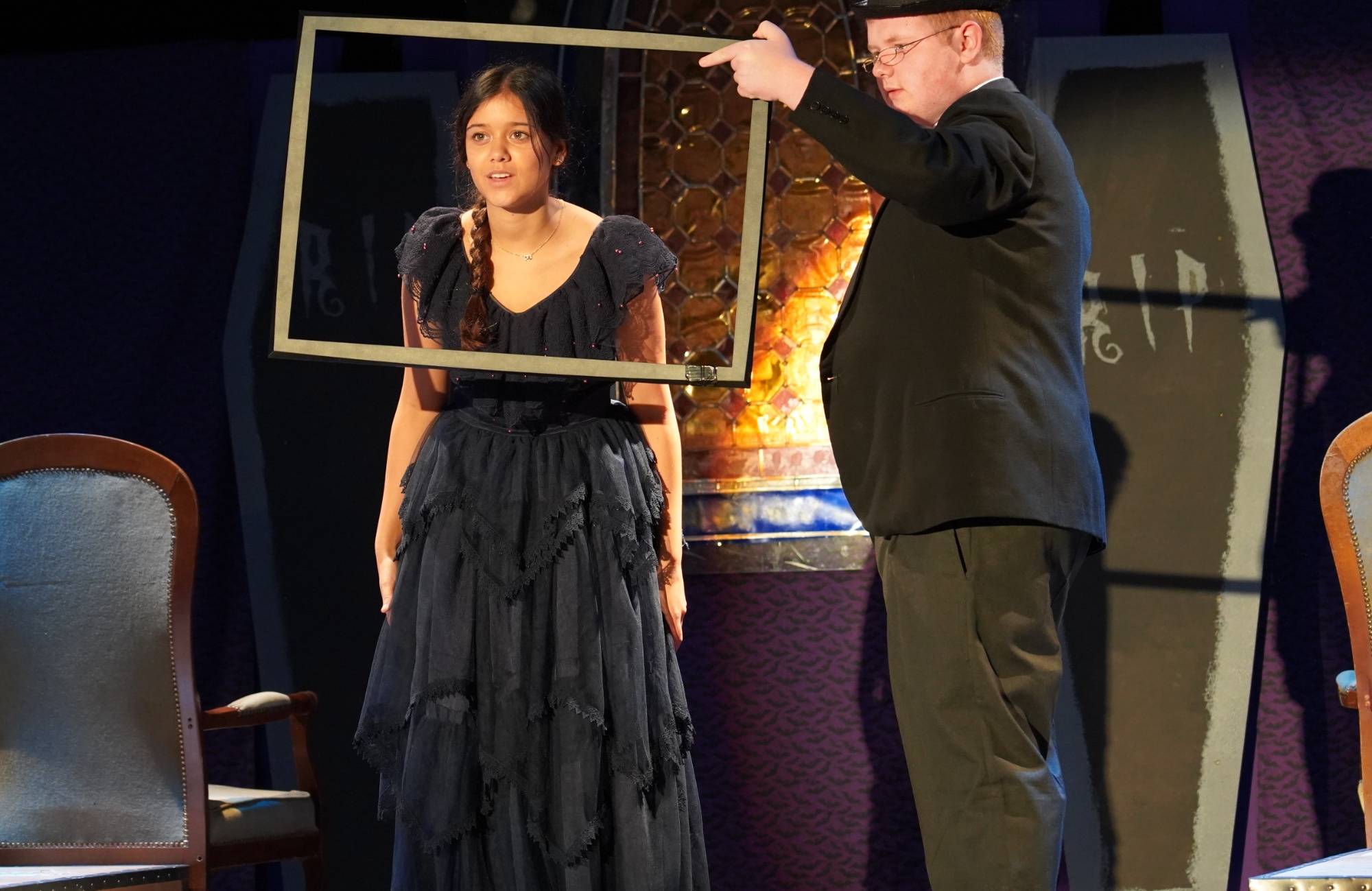
Course content
The course is divided into three components. Drama and Theatre involves developing knowledge and understanding of an analytical framework for making, performing, interpreting and understanding drama, including the practical study of two set texts and the analysis and evaluation of live theatre. Creating Original Drama involves working in groups to create a piece of devised drama and a working notebook, influenced by the methodologies of a prescribed theatre practitioner. Making Theatre involves practically exploring and interpreting three extracts, each from a different play, assessed as a performer, designer or director.
Entry requirements and skills
GCSE Drama is desirable but not required. More important is an open and inquiring mind, literary skills, genuine interest in or broader experience of theatre, a willingness to work collaboratively, and a creative instinct for communicating ideas through drama. Students should visit the theatre as often as possible and be prepared to read widely.
Assessment
All content is examined at the end of the two-year course through one written paper and two coursework components. Component 1, Drama and Theatre, is a 3-hour open-book written examination in three sections covering drama through the ages, 20th and 21st century drama, and live theatre production (40%). Component 2, Creating Original Drama, is coursework comprising a working notebook and devised performance (30%). Component 3, Making Theatre, is coursework comprising the performance of an extract and a reflective report (30%).
Enrichment
In addition to the curriculum the Drama department runs a variety of clubs for all age groups:
- Sound off is a discussion group focusing on communication skills. Students have the chance to air concerns or tackle issues in the safety of a supportive group.
- Tech Club is for technical students to expand their skills in lighting, sound, set design and costume design. This club is also used to support technical GCSE Drama candidates and prepare for upcoming productions.
Drama Scholarships
Drama Scholarships are awarded to students who display an outstanding interest and talent for performance. They should exhibit a keen interest in the subject either at school or outside and will take a leading role in promoting the Drama and Theatre department and be ambassadors for the school. In turn, they will then be encouraged and supported in their development and skills to maximise their potential.
Future pathways
The course is highly regarded by major institutions as preparation for acting or drama studies at university, acting schools and careers in the creative industry such as Director, Stage Manager, Television Producer and Radio Presenter. It also provides a foundation for careers in law, social work, psychology and teaching.
A Level Drama FAQs
What exam board is A Level Drama & Theatre Studies?
The course follows the AQA Drama and Theatre specification (7262).
Do I need GCSE Drama to take A Level Drama & Theatre Studies?
GCSE Drama is desirable but not required. What matters more is an open and inquiring mind, literary skills, a genuine interest in theatre, a willingness to work collaboratively and a creative instinct for communicating ideas through drama.
What topics are covered in A Level Drama & Theatre Studies?
The course has three components: Drama and Theatre (set texts and live theatre analysis), Creating Original Drama (devised performance and working notebook), and Making Theatre (practical interpretation of three play extracts).
How is A Level Drama & Theatre Studies assessed?
Assessment is through one written paper and two coursework components. Component 1 is a 3-hour open-book written exam (40%), Component 2 is devised drama coursework (30%), and Component 3 is making theatre coursework (30%).
What enrichment opportunities are there in Drama?
The department offers regular theatre trips including National Theatre productions, visiting practitioners running workshops, and co-curricular productions. Sixth Form students also help run Drama clubs.
What can A Level Drama & Theatre Studies lead to?
The course prepares students for drama or acting study at university and acting schools, and for creative careers such as director, stage manager, television producer and radio presenter. It also supports careers in law, social work, psychology and teaching.